
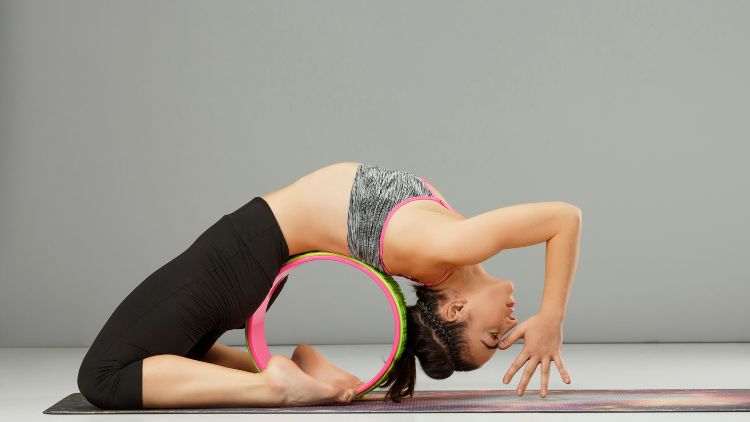
A circular prop may look simple, but its dimensions change how the body is supported. The diameter of a yoga wheel affects the curve placed beneath the spine, the height of the starting position and the leverage required during entry and exit.
This does not mean that one diameter is universally safer or more advanced. The appropriate wheel depends on the participant’s proportions, available movement, exercise and familiarity with the prop.
Diameter Changes the Shape of Support
A smaller wheel creates a tighter curve. When placed beneath the back, it may concentrate extension across a smaller area and create a stronger sensation sooner.
A larger wheel forms a broader arc. It may distribute contact over a larger region and create a more gradual curve, although it also raises the body farther from the floor.
These differences influence comfort and control. A participant who finds the curve of a smaller wheel manageable may still struggle with the height of a larger one. Another person may prefer the broader support but need help entering the position.
The visual size of the wheel does not reveal the complete difficulty.
Entry Height Affects Confidence
Rolling onto a wheel requires the participant to transfer body weight towards a movable object. As diameter increases, the starting height generally increases as well.
A higher wheel may create more space beneath the body, but it can also make the floor feel farther away. Participants may respond by rushing, gripping or holding the breath.
A smaller wheel sits closer to the ground, which may improve confidence during selected movements. Its tighter curve can still feel intense through the back.
The instructor should consider both the mechanical and psychological effects of the setup.
Shoulder Position Changes With the Arc
During supported backbends, the arms may move overhead while the chest and upper back follow the wheel’s curve. Diameter affects the relative position of the shoulders, ribs and floor.
If the wheel is too large for the participant’s current control, the arms may appear to travel farther because the ribs lift and the lower back extends. This creates a larger visible shape without demonstrating isolated shoulder movement.
A smaller wheel may reduce the total height while producing a sharper extension demand.
The instructor can use a limited arm range, bent elbows or separate shoulder exercises before combining them with the wheel.
Spinal Extension Should Be Distributed
Participants often seek a dramatic backbend and allow the most mobile area of the spine to absorb the movement. The lower back may extend substantially while the upper back and shoulders contribute less.
A wheel can provide tactile information about where contact occurs, but it does not automatically distribute extension evenly.
The participant should notice:
- Where the strongest curve is felt.
- Whether the ribs lift abruptly.
- Whether breathing remains available.
- Whether pressure feels broad or localised.
- Whether the neck remains comfortable.
- Whether the position can be exited slowly.
Sharp pain, tingling, numbness or concentrated joint pressure are reasons to stop and adjust.
Width and Surface Also Matter
Diameter is only one specification. Wheel width affects stability and the amount of surface contacting the body. A narrow wheel may feel less stable, while a wider one may distribute pressure differently.
Surface material affects grip. A wheel that slides on the mat or feels slippery against clothing creates an additional control problem.
Firmness also changes comfort. Thick padding can soften contact, but excessive softness may make pressure less predictable.
Participants should not compare wheels by diameter alone. The complete design influences how the prop behaves.
Body Proportions Influence the Experience
Two participants using the same wheel may experience different leverage because of torso length, shoulder range and limb proportions.
A diameter that supports one person near the upper back may contact another closer to the lower ribs. Hand placement and foot distance may also need adjustment.
This is why copying another participant’s setup can be unhelpful. The instructor should position the wheel according to the individual and the intended movement.
A standard studio prop can still require personalised entry and range.
Use Support During Progression
A wheel does not need to carry the full body immediately. Early exercises may use it against a wall or combine it with blocks and floor contact.
A progression might involve:
- Learning how the wheel rolls under light pressure.
- Using it for supported upper-back movement.
- Practising arm movement without a deep backbend.
- Entering a small supported extension.
- Increasing the range only when the exit remains controlled.
The participant should understand how to leave the position before moving farther.
Support can be reduced gradually without changing wheel diameter.
Avoid Switching Props Without Guidance
A participant may assume that buying a smaller or larger wheel will solve discomfort. Changing diameter can move pressure and leverage in unexpected ways.
Studio wheels may also be selected according to class programming and equipment standards. Participants should not substitute personal props without confirming that they are suitable.
Products should be inspected for cracks, deformation, loose surface material and contamination before use. Manufacturer load guidance and care instructions should be followed.
Progress Is More Than a Deeper Curve
At Yoga Edition, participants can explore wheel-supported positions with instructor guidance on setup, contact and movement range.
Progress may mean entering more calmly, maintaining better rib control or using the same wheel with less unnecessary tension. It does not require moving to the smallest, largest or visually most dramatic prop.
Wheel diameter changes curvature, height and leverage together. Understanding these effects helps participants choose a setup according to control rather than appearance. The best wheel is not the one that creates the deepest backbend. It is the one that supports the intended movement while allowing steady breathing and a reliable exit.
